
Identify Carboxylic acids , amines and amino acids

درباره سایت
آخرین مطالب
امکانات وب
alkyne
Bromine in Carbon Tetrachloride
Chemical properties
Bromine will add to the carbon-carbon double bond of alkenes to produce dibromoalkanes and with alkynes to produce tetrabromoalkanes. When this reaction occurs, molecular bromine is consumed, and its characteristic dark red‑brown color disappears if bromine is not added in excess. The rapid disappearance of the bromine color is a positive test for unsaturation.

The test is not unequivocal, however, because some alkenes do not react with bromine, and some react very slowly. In the case of a negative test, therefore, the potassium permanganate test should be performed

Physical Properties

Complications
Should be employed in conjunction with Baeyer test (dilute KMnO4
Electron-withdrawing groups in the vinylic position can slow down bromine addition to the point that a negative test is erroneously produced
Tertiary amines (like pyridine) form perbromides upon treatment with bromine and lead to false positive tests
Aliphatic and aromatic amines can discharge the bromine color without the evolution of HBr gas
http://academics.wellesley.edu/Chemistry/chem211lab/Orgo_Lab_Manual/Appendix/ClassificationTests/unsaturation.html
Potassium Permanganate the Baeyer Test
Chemical properties

A second qualitative test for unsatuxadration, the Baeyer test, depends on the ability of potassium permanganate to oxidize the carbon‑carbon double bond to give alkanediols or the carbon-carbon triple bond to give carboxylic acids

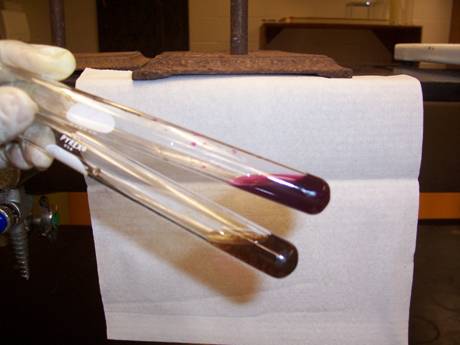
The permanganate is destroyed in the reaction, and a brown precipitate of MnO2 is produced. The disappearance of the characteristic color of the permanganate ion is a positive test for unsaturation. However, care must be taken, since compounds containing certain other types of functional groups (for example, aldehydes, containing the --CH=O group) also decolorize permanganate ion
http://chemistry.gravitywaves.com/CHE301/Alkene%20Classification%20Tests.htm

Physical Properties
Complications
Water insoluble compounds should be dissolved in ethanol, methanol, or acetone
Often, the brown precipitate fails to form and the solution turns reddish-brown
Easily oxidized compounds give a positive test: a) Most aldehydes give a positive test. b) Formic acid and its esters give a positive test
Alcohols with trace impurities give a positive test
Phenols and aryl amines give a positive test
Carbonyl compounds which decolorize bromine/methylene chloride usually give a negative test
halide of aliphatic
BEILSTEIN TEST
Chemical properties
The presence of bromine, chlorine or iodine in organic compounds can be detected by the Beilstein Test. This test depends on the production of a volatile copper halide (CuX2 ) produced when an organic halide is strongly heated with a copper oxide. The copper halide will give off blue-green light when excited in the high temperature of a burner flame. This test is extremely sensitive and a positive result should always be confirmed by other methods

Physical Properties

http://chemistry.gravitywaves.com/CHE301/Alkene%20Classification%20Tests.htm
Silver Nitrate in Ethanol Test
Chemical properties
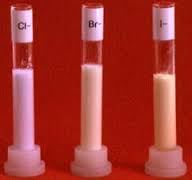
If a compound is known to contain a halogen (bromine, chlorine, or iodine), information concerning its environment may be obtained from observation of its reaction with alcoholic silver nitrate. The overall reaction is shown in the following equation
Ethanol
RX + AgNO3 ---------------> AgX + RONO2
Such a reaction will be of the SN1 type. Tertiary halides are more reactive in an SN1 reaction than secondary halides, which are in turn more reactive than primary halides. Differing rates of silver halide precipitation would be expected from haloxadgen in each of these environments, namely, primary


Physical Properties
Complications
Carboxylic acids have been known to react in this test, giving false positives
http://academics.wellesley.edu/Chemistry/chem211lab/Orgo_Lab_Manual/Appendix/ClassificationTests/halide.html
aromatic hydrocarbons
Friedel-Crafts
Chemical properties

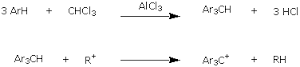
This Lewis acid-catalyzed electrophilic aromatic substitution allows the synthesis of alkylated products via the reaction of arenes with alkyl halides or alkenes. Since alkyl substituents activate the arene substrate, polyalkylation may occur. A valuable, two-step alternative is Friedel-Crafts Acylation followed by a carbonyl reduction

Physical Properties
Complications
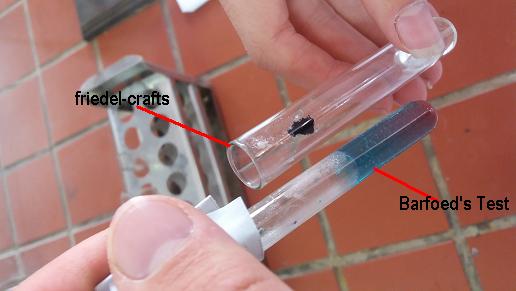
Aromatic esters, ketones, amines other compounds containing nitrogen, oxygen may also be blue or green
http://www.organic-chemistry.org/namedreactions/friedel-crafts-alkylation.shtm
carbohydrate
Molish test
Chemical properties
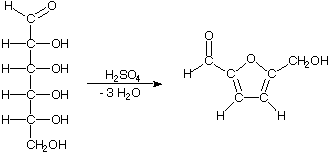
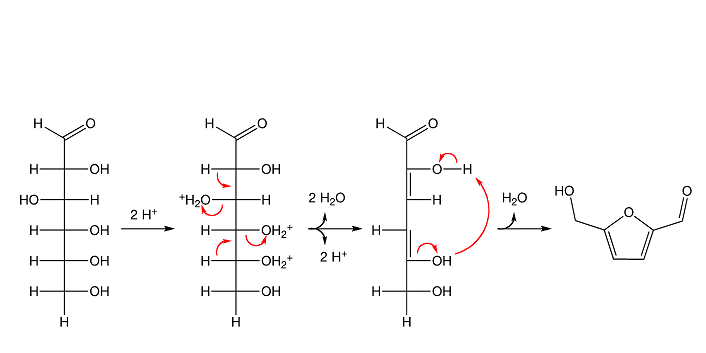
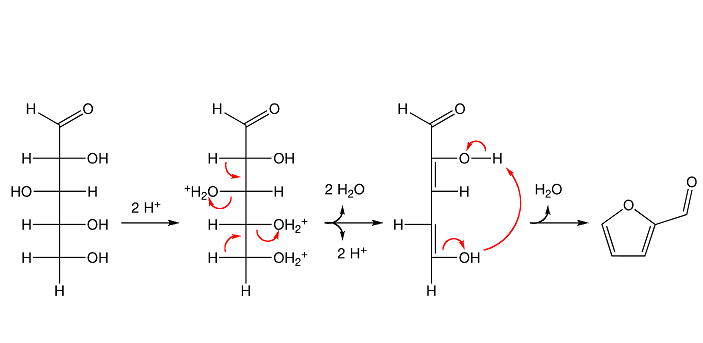
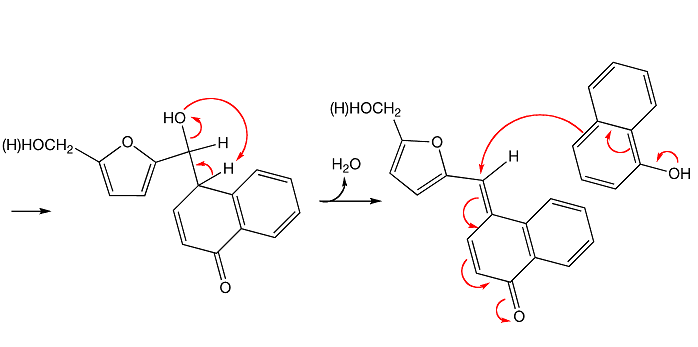
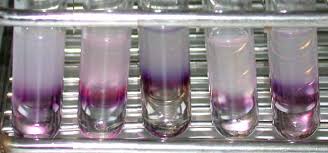
To detect the presence of carbohydrates, the solution is first treated with a strong acid.This is for hydrolyzing the carbohydrate to monosaccharide. A compound named furfurol is then made when water is removed from monosaccharides. This furfurol is consolidated to shape a violet ring or other shaded compound.The compound furfurol is dense with alpha-naphthol or other phenol present in molisch’s reagent
Reactions
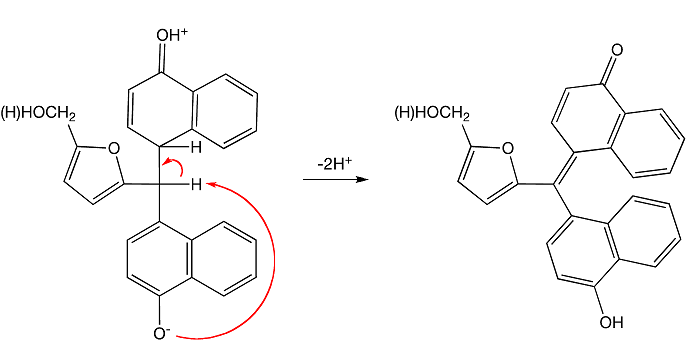
The test reagent dehydrates pentoses to form furfural (top reaction) and dehydrates hexoses to form 5-hydroxymethyl furfural (bottom reaction). The furfurals further react with -naphthol present in the test reagent to produce a purple product (reaction not shown)


Physical Properties

http://documents.mx/documents/experiment-8b.html
Barfoed's Test
Chemical properties
Barfoed’s reagent
To perform any biological or scientific test, there reagents that are necessary. In order to perform the barfoed test, we need some reagents that are much crucial to the cause. These reagents are listed below
Copper Acetate
Copper(II) acetic acid, additionally called as the cupric acetic acid solution, is the synthetic compound with the recipe Cu (OAC)2 where OAC− is acetic acid derivation (CH3CO2−). The hydrated subordinate, which contains one particle of water for every Cu molecule, is accessible industrially
Acetic Acid
Acetic acid is a colorless fluid natural compound with the synthetic recipe CH3COOH (additionally composed as CH3CO2H or C2H4O2). Whenever undiluted, it is once in a while called frosty acetic acid. Vinegar is approximately 3–9% acetic acid by volume, making acetic acid the fundamental part of vinegar separated from water. Acidic corrosive has a particularly bitter taste and a bad smell. Your reagent to perform the test is the one which is composed of the above two elements. You also need original sugar solution to perform the test
/
Reactions:
Reducing monosaccharides are oxidized by the copper ion in solution to form a carboxylic acid and a reddish precipitate of copper (I) oxide within three minutes. Reducing disaccharides undergo the same reaction, but do so at a slower rate

Physical Properties


برچسب:
نویسنده: کاوه زمانی